Cold tiles, steamed-up mirrors and goosebumps after your shower: especially in spring and autumn, or in bathrooms without their own radiator, a small heater for the bathroom makes a real difference. But bathrooms come with special rules for anything electrical. Here’s what you need to know – and when a compact plug-in heater like the WellHeater is the right choice.
Why a heater for the bathroom?
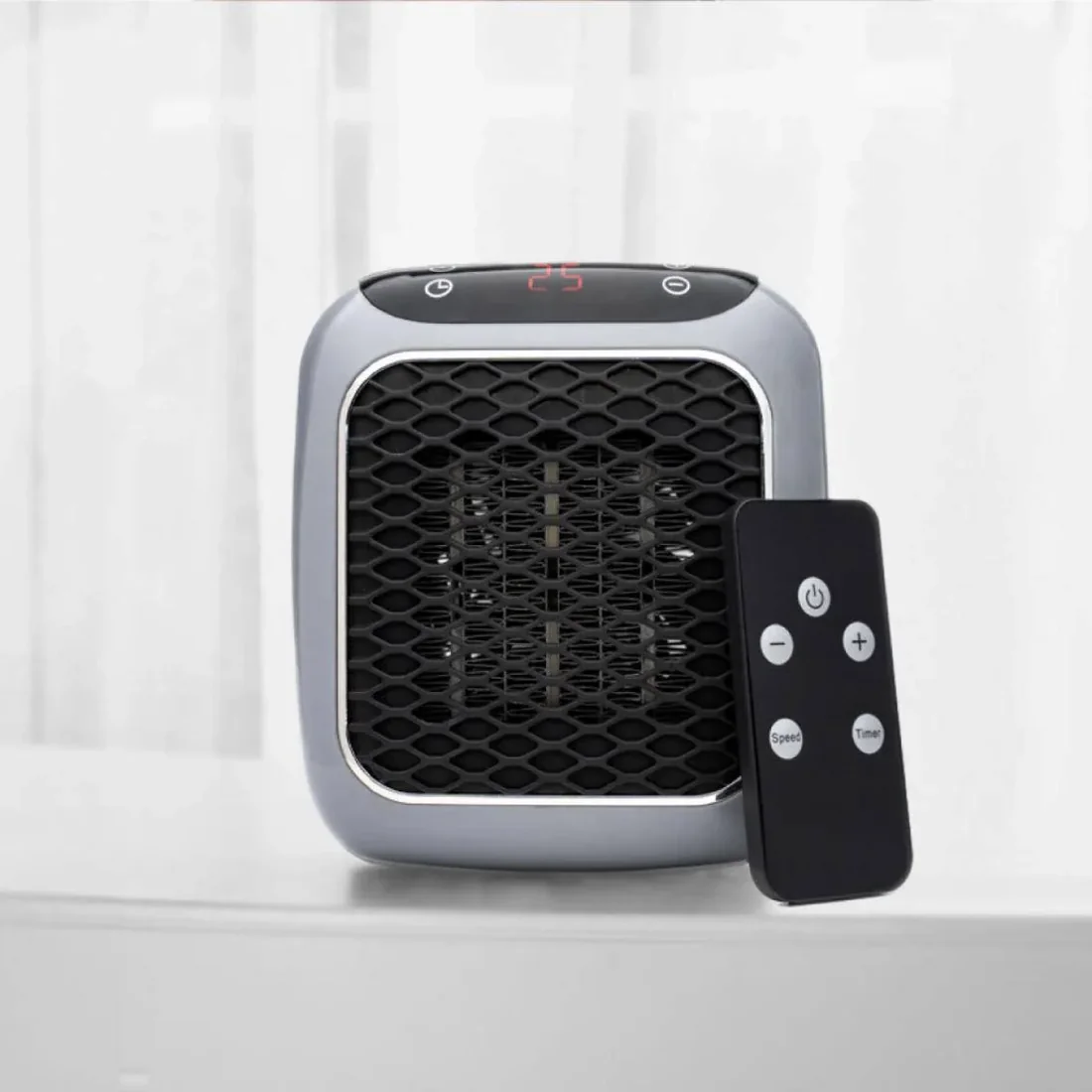
In the bathroom you want warmth fast – and only for a short time. That’s exactly what fan heaters do better than a slow radiator: they deliver warmth within minutes and can be switched off straight afterwards. According to the manufacturer, a WellHeater* brings a small room up to a comfortable temperature in about five minutes.
Bathroom safety: what applies where
- Only ever use electric heaters outside the bathroom zones around the bath and shower – well away from water and splashes.
- Only use a proper, permanently installed mains socket, never an extension lead or multi-plug adaptor.
- UK: never plug a heater into a shaver socket – these are only designed for shavers and electric toothbrushes.
- Bathroom circuits should be protected by an RCD (UK, Ireland, Australia) or a GFCI outlet (US, Canada).
- Don’t cover the heater or hang towels over it.
In the UK, wiring regulations (BS 7671) only allow standard sockets in a bathroom at least 2.5 metres from the bath or shower zone – which is why most British bathrooms have nothing but a shaver socket. A plug-in heater like the WellHeater is therefore best suited to en-suites, cloakrooms and rooms next to the bathroom – for example a bedroom, landing or dressing area – or a larger bathroom where a proper socket exists outside the zones. If you want a heater right inside a small UK bathroom, a fixed, splash-proof unit fitted by an electrician is the correct route.
In the US and Canada, bathrooms usually have outlets next to the sink, and these must be GFCI-protected. Use the outlet that’s furthest from the tub and shower, keep the heater dry and away from splashes, and never use it while it could come into contact with water.
Special bathroom heaters with a high protection rating (e.g. IPX4) are built for wall mounting near water. The WellHeater, on the other hand, is a plug-in device – ideal for the socket by the door, in the en-suite or at the dressing table, but not for use near the shower or bath.
Wall-mounted, freestanding or plug-in?
| WellHeater (plug-in) | Wall-mounted bathroom heater | Freestanding fan heater | |
|---|---|---|---|
| Installation | none – just plug in | drilling, usually an electrician | none |
| Space needed | none | wall space | floor space + cable |
| Power | 800 W | usually 2,000 W | usually 1,500–2,000 W |
| Remote/timer | ✓ | sometimes | rarely |
| Portable | ✓ | ✗ | ✓ |
| Price | from £34.37 | £60.00–£200.00 | £20.00–£60.00 |
For rented homes and anyone who doesn’t want to drill holes, a plug-in heater is the simplest solution. And once you’re warm and dressed, you just take the WellHeater with you into the study or bedroom.
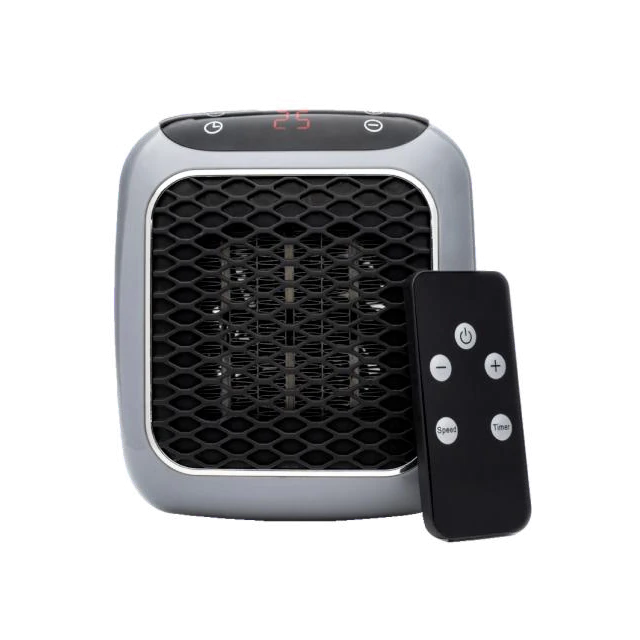
WellHeater for en-suites & small rooms
- Warm in about 5 min (manufacturer)
- Timer for pre-warming
- No drilling, no fitting
Pre-warming with the timer
The biggest comfort boost: use the remote to set the WellHeater to run 20 to 30 minutes before your shower. When you walk in, it’s warm – and the heater doesn’t run any longer than necessary. The thermostat holds your chosen temperature instead of drawing full power all the time.
What does it cost to heat a small bathroom?
At 800 watts, half an hour at full power costs about £0.10 at an electricity rate of 25p/¢ per kWh – roughly £3.00 a month if you pre-warm every day. A standard 2,000-watt bathroom heater comes to about £7.50 over the same period. More details in our WellHeater running cost guide.
Frequently asked questions
Can you use a plug in heater in a bathroom?
Only outside the bathroom zones, plugged into a proper, permanently installed mains socket protected by an RCD or GFCI. In the UK, standard sockets are only allowed well away from the bath and shower, so most bathrooms only have a shaver socket – a heater must never go into one. There, a plug-in heater suits en-suites and adjoining rooms better.
What is the best small heater for a bathroom?
Look for a ceramic heating element, thermostat, timer and overheat protection. The WellHeater offers all of that in a compact plug-in format – for bathrooms with a suitable socket outside the zones, en-suites and adjoining rooms.
How quickly does the room warm up?
With the WellHeater, in about five minutes according to the manufacturer – a typical small room up to 12 m² (130 sq ft) becomes comfortable quickly.
Is a bathroom heater expensive to run?
At 30 minutes a day and 800 W, about £3.00 a month at 25p/¢ per kWh. It only gets expensive with 2,000-watt heaters that run for hours.
Is a wall outlet heater for the bathroom safe in the US?
Bathroom outlets in the US must be GFCI-protected. Use the outlet furthest from the tub and shower, keep the heater dry and never cover it.